 +86-151 6276 6160
 بيع002@hxdrobots.com
 English
 Español
 Pусский
 Français


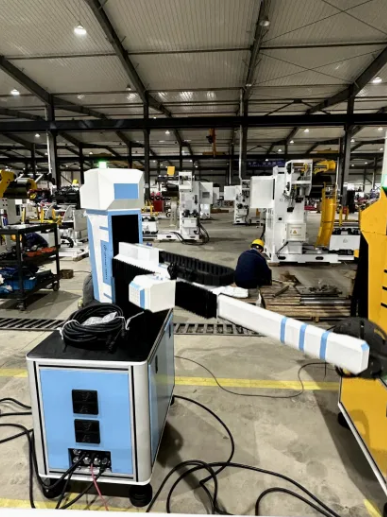
Sure — here is a 1000-word English article on **Auto Parts Stamping Processing Technology**:
---
Auto Parts Stamping Processing Technology
Auto parts stamping processing technology is one of the most important manufacturing methods in the automotive industry. It refers to the use of presses and dies to shape metal sheets into various vehicle components such as body panels, brackets, reinforcements, structural supports, and engine-related parts. With the continuous development of the automobile industry, stamping technology has become more advanced, efficient, precise, and automated. It plays a vital role in ensuring the strength, appearance, safety, and production efficiency of modern vehicles.
1. Basic Principle of Stamping
Stamping is a metal forming process in which flat metal sheets are placed into a stamping press and shaped by a die under high pressure. The die determines the final shape of the part, while the press provides the necessary force to deform the material. In the automotive industry, stamping is widely used because it can produce complex parts with high accuracy and repeatability.
The process usually begins with coil or sheet metal, which is cut into blanks of the required size. These blanks are then transferred into a series of stamping operations, such as blanking, punching, bending, drawing, forming, and trimming. Depending on the part structure and production requirements, a single-station press or progressive die can be used. For large-volume automotive production, progressive stamping is often preferred because it allows multiple operations to be completed in one continuous cycle.
2. Main Types of Stamping Processes
There are several common stamping processes used in auto parts manufacturing:
Blanking
Blanking is the process of cutting a sheet metal piece into a specific outline. The blanked piece becomes the workpiece for the next operation. This process is important for producing components with accurate dimensions.
Punching
Punching is used to make holes or openings in metal sheets. It is widely applied in brackets, mounting plates, and structural parts where bolts, screws, or connectors are needed.
Bending
Bending changes the angle or shape of a metal sheet without breaking it. Many automotive parts, such as reinforcement beams and brackets, require bending to achieve the desired geometry.
Deep Drawing
Deep drawing is used to create hollow or cup-shaped parts by stretching the sheet metal into a die cavity. This method is commonly used for producing fuel tank components, wheel housings, and certain body panels.
Trimming and Flanging
After the main forming operation, excess material is removed by trimming. Flanging is then used to bend the edges of the part for additional strength or for assembly purposes.
3. Materials Used in Auto Parts Stamping
The choice of material has a major impact on the stamping process and the quality of the final product. Common materials include low-carbon steel, high-strength steel, stainless steel, aluminum alloys, and galvanized steel.
Low-carbon steel is widely used because of its good formability, low cost, and sufficient strength. High-strength steel is used in safety-related parts where crash resistance is important. Aluminum alloys are becoming increasingly popular because they are lightweight and help improve fuel efficiency and reduce emissions. However, aluminum is more difficult to stamp due to its lower ductility and different springback characteristics.
Each material requires different tooling design, lubrication, and forming parameters. Therefore, engineers must carefully select the appropriate material based on the part’s function, weight, cost, and performance requirements.
4. Stamping Equipment and Dies
Stamping equipment mainly includes mechanical presses, hydraulic presses, servo presses, and automatic feeding systems. Mechanical presses are suitable for high-speed production and are commonly used in mass manufacturing. Hydraulic presses provide better control over pressure and are suitable for deep drawing and complex forming operations. Servo presses combine speed, precision, and flexibility, making them increasingly popular in modern factories.
Dies are the core tools in stamping processing. A die is a specially designed mold that shapes the metal during the pressing operation. The quality of the die directly affects the precision, surface quality, and consistency of the stamped parts. Die design must consider material behavior, part geometry, press capacity, and production speed. High-quality dies are usually made from tool steel and undergo heat treatment to improve durability and wear resistance.
5. Process Flow of Auto Parts Stamping
The typical stamping process for auto parts includes the following steps:
1. **Material preparation** – Metal coils or sheets are selected and cut into blanks.
2. **Feeding** – The blanks are automatically or manually fed into the press.
3. **Stamping operation** – The press and die perform blanking, punching, bending, or forming.
4. **Secondary processing** – Some parts may need trimming, piercing, welding, or surface treatment.
5. **Inspection** – Dimensional accuracy, surface quality, and mechanical performance are checked.
6. **Assembly** – Qualified stamped parts are delivered to the next stage of vehicle assembly.
This workflow helps ensure efficiency, consistency, and quality in large-scale production.
6. Advantages of Stamping Technology
Stamping technology offers many advantages in the automotive industry. First, it is highly efficient and suitable for mass production. Once the die is designed and installed, a large number of parts can be produced in a short time. Second, stamping provides excellent dimensional consistency, which is critical for parts that must fit precisely during vehicle assembly.
Third, stamping can reduce material waste through optimized nesting and progressive die design. Fourth, it supports the manufacture of complex shapes that would be difficult or expensive to make by other methods. Finally, stamping is compatible with automation, which improves productivity, reduces labor costs, and enhances safety.
7. Challenges in Stamping Processing
Although stamping is widely used, it also faces several technical challenges. One major issue is springback, where the material partially returns to its original shape after forming. This can affect the accuracy of bent and drawn parts. Another challenge is wrinkling or cracking, which may occur if the material flow is not properly controlled.
Tool wear is also a serious concern, especially in high-volume production. Dies must withstand repeated impact and friction, so maintenance and lubrication are essential. In addition, with the increasing use of lightweight materials such as aluminum and advanced high-strength steel, stamping process parameters must be adjusted to ensure proper forming without damaging the material.
8. Future Development Trends
The future of auto parts stamping processing technology is moving toward intelligence, automation, and lightweight manufacturing. Smart factories are introducing robotic handling systems, real-time monitoring, and digital simulation to improve efficiency and reduce defects. Computer-aided engineering (CAE) is now widely used in die design and process optimization, allowing engineers to predict forming problems before production begins.
Another trend is the use of advanced materials and multi-material structures to meet requirements for fuel economy, safety, and environmental protection. Servo press technology, laser blanking, and flexible manufacturing systems are also becoming more common. In the future, stamping technology will continue to evolve to support the production of safer, lighter, and more efficient automobiles.
Conclusion
Auto parts stamping processing technology is a core process in automotive manufacturing. It transforms metal sheets into precise and durable components that are essential for vehicle structure and performance. Through continuous improvement in materials, dies, equipment, and automation, stamping technology has become more efficient and intelligent. As the automotive industry moves toward lightweight design, electric vehicles, and smart manufacturing, stamping processing will remain a key technology supporting innovation and industrial development.
---
If you want, I can also:
1. make it **more formal and academic**,
2. turn it into a **college essay**, or
3. add a **title, introduction, and conclusion format** for submission.
يستخدم هذا الموقع ملفات تعريف الارتباط لضمان حصولك على أفضل تجربة على موقعنا.



 هاتف
تعليق
(0)