 +86-151 6276 6160
 بيع002@hxdrobots.com
 English
 Español
 Pусский
 Français

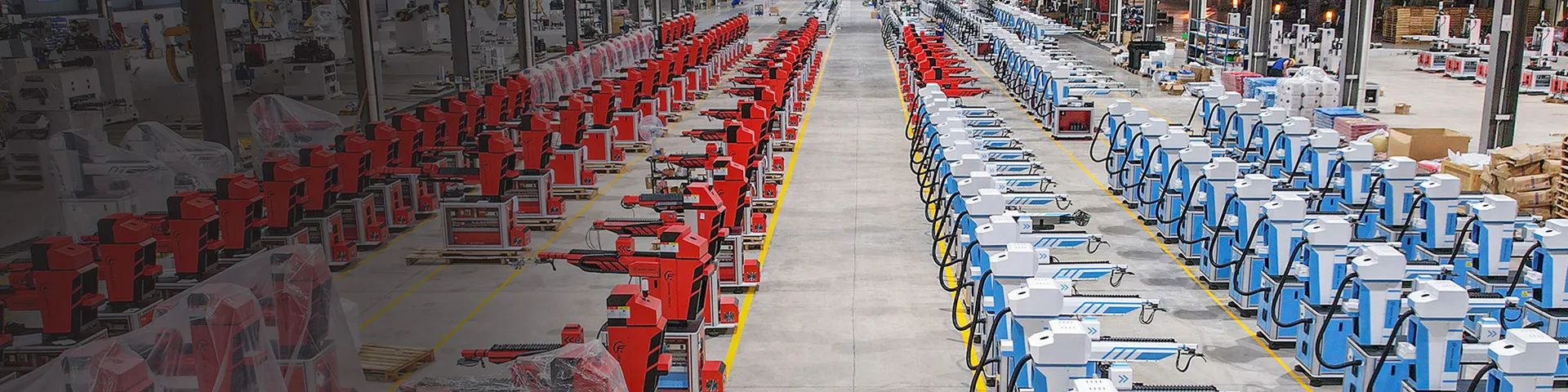
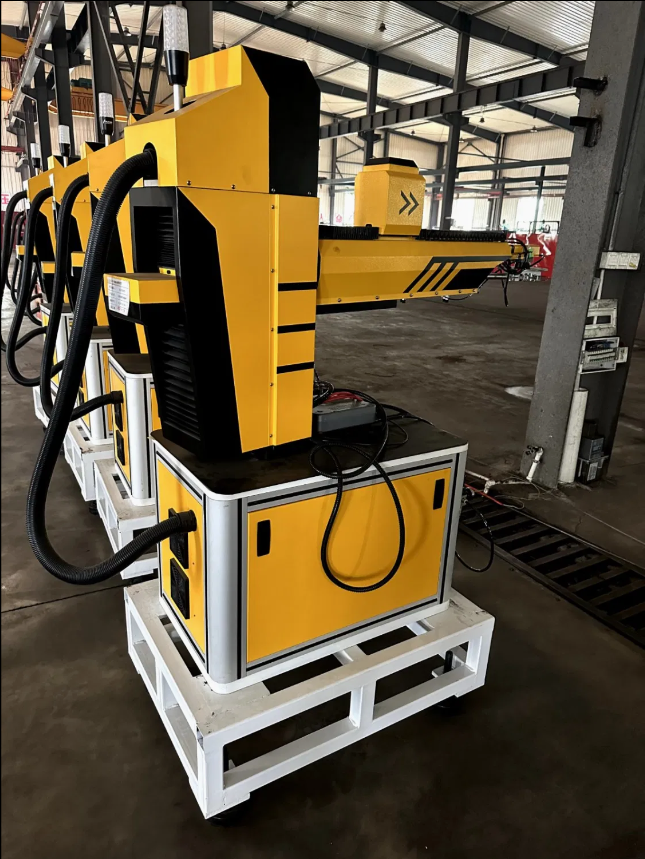
Certainly — here is a 1000-word English article on **Cold Stamping Process Supported by Robot**:
---
Cold Stamping Process Supported by Robot
Cold stamping is one of the most important manufacturing processes in modern industry. It is widely used in the production of automotive parts, household appliances, electronic components, and many other metal products. The process involves shaping metal sheets at room temperature by using high pressure and specialized dies. With the development of automation and intelligent manufacturing, robots have become an essential part of the cold stamping process. The integration of robots has greatly improved production efficiency, product quality, workplace safety, and manufacturing consistency.
What Is Cold Stamping?
Cold stamping is a metal forming process in which a sheet of metal is placed into a die and shaped by a press without heating the material. Unlike hot stamping, cold stamping is performed at or near room temperature. The metal is deformed under high pressure, which allows manufacturers to create parts with accurate dimensions and smooth surfaces. Common cold stamping operations include blanking, punching, bending, drawing, and forming.
This process is especially suitable for mass production because it is fast, economical, and capable of producing repeatable results. Materials such as steel, aluminum, copper, and stainless steel can be processed by cold stamping. Because the material is not heated, the process saves energy and reduces thermal deformation.
Role of Robots in Cold Stamping
Traditionally, cold stamping required manual feeding, part removal, and inspection. However, this method had several disadvantages, such as low efficiency, human fatigue, and safety risks. Since stamping presses operate with strong force and rapid movement, workers are exposed to serious hazards if they work too close to the machine. To solve these problems, robots are now used extensively in stamping workshops.
Robots can perform many tasks in the cold stamping process, including loading raw sheets, transferring parts between presses, removing finished products, stacking components, and conducting quality inspection. In many advanced factories, robotic arms work together with conveyor systems, sensors, and programmable logic controllers to create a fully automated production line.
Advantages of Robot-Supported Cold Stamping
1. Improved Safety
One of the most important benefits of using robots in cold stamping is improved safety. Stamping presses can cause severe injuries if a human operator accidentally enters the working area. Robots reduce the need for direct human contact with dangerous equipment. By handling the material automatically, robots help prevent accidents, protect workers, and create a safer workplace.
2. Higher Efficiency
Robots can work continuously without rest, which greatly increases productivity. They can operate faster than manual labor and maintain a constant production rhythm. In large-scale manufacturing, even a small improvement in cycle time can result in a significant increase in output. Robots also reduce delays caused by human error, fatigue, or inconsistency.
3. Better Precision and Consistency
Cold stamping requires precise positioning of materials. If a metal sheet is placed incorrectly, the final part may be defective. Robots are highly accurate and can repeat the same movement thousands of times with minimal deviation. This precision ensures that each part meets design specifications and reduces the number of defective products.
4. Lower Labor Costs
Although robot systems require an initial investment, they can reduce long-term labor costs. A single robot can replace several manual operators in repetitive tasks. In addition, robots decrease the cost of rework, scrap, and accidents. Over time, this makes robotic stamping lines economically beneficial for manufacturers.
5. Improved Working Conditions
Robot support allows human workers to focus on supervision, maintenance, programming, and quality control instead of physically demanding tasks. This improves working conditions and reduces worker fatigue. Employees can participate in higher-value activities rather than repetitive manual handling.
Main Types of Robots Used
Several types of robots are used in cold stamping operations. Industrial articulated robots are common because they have multiple joints and can move in different directions. They are suitable for picking, placing, and transferring metal sheets or stamped parts. Cartesian robots are also used in some stamping lines because they move along straight axes and provide high positioning accuracy. In addition, collaborative robots, or cobots, may be used in smaller workshops where human-robot cooperation is needed.
The choice of robot depends on factors such as part size, press speed, production volume, and factory layout. End-of-arm tools are also important. These tools may include vacuum grippers, mechanical clamps, magnetic lifters, or customized fixtures that hold the metal securely during transfer.
Robot Integration in the Stamping Line
A typical robot-supported cold stamping line includes a feeder, a press machine, a robot arm, sensors, and a control system. The robot receives instructions from the production controller and moves raw material into the press. After stamping, it removes the finished part and places it on a conveyor or pallet. Sensors check position and detect errors to ensure smooth operation.
In multi-stage stamping processes, robots can transfer parts from one press to another. This is especially useful in automotive manufacturing, where a part may need several forming steps before completion. Robots ensure that each part is positioned correctly at every stage, which improves efficiency and reduces human involvement.
Challenges and Limitations
Despite its many advantages, robot-supported cold stamping also has some challenges. The initial cost of purchasing robots, control systems, and safety equipment can be high. Small and medium-sized enterprises may find this investment difficult. Robot programming and maintenance also require skilled technicians. If the system is not properly designed, production may stop due to mechanical failure or software errors.
Another challenge is flexibility. Some stamping operations involve frequent changes in product type, which may require reprogramming and tool adjustments. Although modern robots are becoming more flexible, factories still need careful planning to maximize efficiency.
Future Development
The future of cold stamping supported by robots is closely linked to smart manufacturing and Industry 4.0. More factories are adopting artificial intelligence, machine vision, and real-time data analysis to improve automation. In the future, robots will become more intelligent, more adaptable, and more connected to digital systems. They will not only move parts but also monitor quality, predict maintenance needs, and optimize production automatically.
Advanced sensor technology will allow robots to detect part position more accurately and adjust their movement in real time. This will make stamping lines more reliable and reduce waste. As technology develops, robotic cold stamping will become even more common in global manufacturing.
Conclusion
The cold stamping process supported by robots represents a major step forward in modern industry. By combining the efficiency of stamping with the precision and automation of robots, manufacturers can produce high-quality metal parts more safely and economically. Robots improve safety, increase output, reduce labor intensity, and enhance product consistency. Although there are challenges such as cost and technical complexity, the long-term benefits are significant. With continued innovation, robotic cold stamping will play an increasingly important role in the future of manufacturing.
---
If you want, I can also:
1. **simplify this into easier English**,
2. **make it more academic/formal**, or
3. **turn it into a Chinese-English bilingual version**.
يستخدم هذا الموقع ملفات تعريف الارتباط لضمان حصولك على أفضل تجربة على موقعنا.



 هاتف
تعليق
(0)