 +86-151 6276 6160
 بيع002@hxdrobots.com
 English
 Español
 Pусский
 Français

Sure — here is a **1000-word English article** on **“Hardware Mold Factory Stamping robot Application”**:
---
Hardware Mold Factory Stamping robot Application
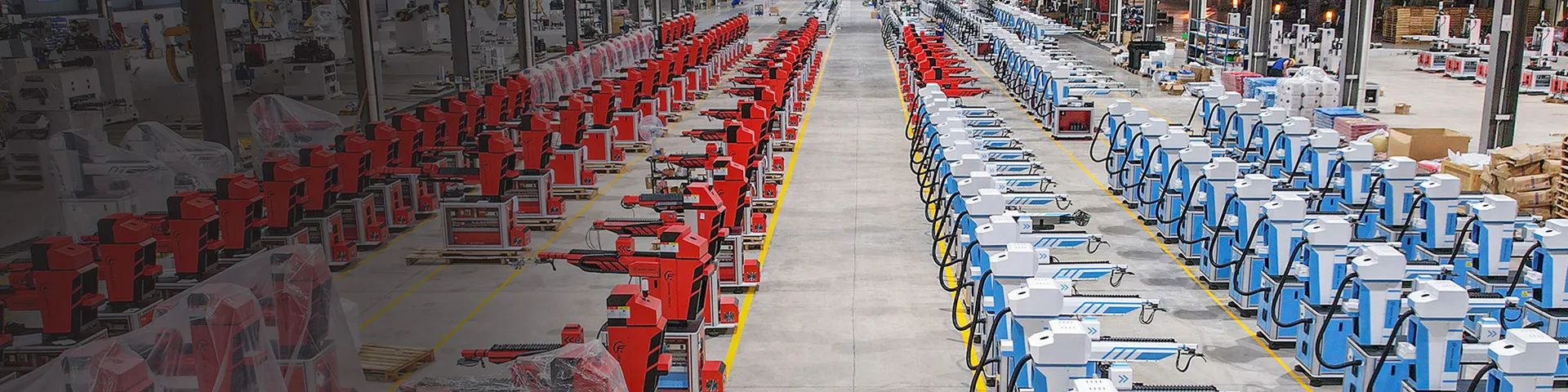
With the rapid development of industrial automation, Stamping robots have become an essential part of modern hardware mold factories. In the traditional production process, stamping operations rely heavily on manual labor, which often leads to low efficiency, unstable product quality, and safety risks. The introduction of Stamping robots has greatly improved production speed, precision, and consistency. As a result, more and more hardware mold factories are adopting robotic systems to enhance competitiveness and meet the increasing demands of the market.
1. The Role of Stamping robots in Hardware Mold Factories
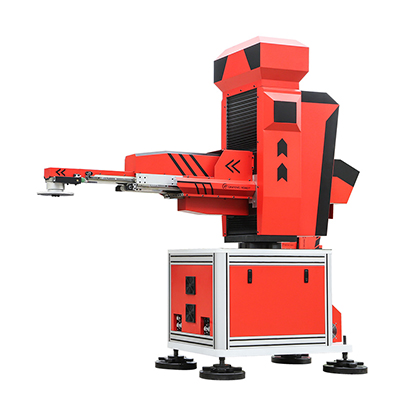
A Stamping robot is an automated machine designed to perform repetitive handling tasks in stamping production lines. In hardware mold factories, these robots are mainly used for loading and unloading metal sheets, transferring workpieces between stamping machines, and stacking finished products. Their main function is to replace manual operation in high-frequency, high-risk, and high-precision production environments.
Hardware mold factories usually deal with metal parts such as brackets, shells, connectors, appliance components, and automotive accessories. These products often require stamping, bending, punching, and forming processes. Because the production volume is large and the cycle is short, Stamping robots can play a critical role in improving production continuity and reducing labor intensity.
2. Advantages of Stamping robot Application
2.1 Improving Production Efficiency
One of the biggest advantages of Stamping robots is their ability to work continuously without fatigue. Unlike human workers, robots can operate 24 hours a day with only minimal maintenance. This significantly increases the output of the stamping line. In a hardware mold factory, where mass production is common, improved efficiency directly translates into higher profits and faster order delivery.
2.2 Ensuring Product Quality and Consistency
Manual stamping operations are affected by human factors such as skill level, fatigue, and attention. These factors may cause positioning errors, scratches, deformation, or inconsistent part quality. Stamping robots, however, perform every action according to pre-set programs. They handle materials with high precision, ensuring that each workpiece is placed in the correct position and processed uniformly. This helps factories maintain stable product quality and reduce defective rates.
2.3 Reducing Labor Costs
Labor costs continue to rise in many manufacturing regions. At the same time, the recruitment and training of skilled workers have become more difficult. Stamping robots can reduce dependency on manual workers and lower long-term labor expenses. Although the initial investment in automation may be high, the return on investment is often significant because of reduced labor costs, higher production efficiency, and fewer quality losses.
2.4 Improving Workplace Safety
Stamping machines are among the most dangerous equipment in metal processing. Workers may suffer injuries from high-speed stamping, material ejection, or incorrect operation. By replacing manual loading and unloading, stamping robots greatly reduce the risk of accidents. They can work in hazardous environments without exposing human operators to direct danger. This creates a safer and more reliable factory environment.
2.5 Supporting Flexible Production
Modern hardware mold factories often need to produce different parts in small or medium batches. Stamping robots can be reprogrammed quickly to adapt to different products and production requirements. With the help of sensors, vision systems, and intelligent control software, robots can handle various sizes and shapes of materials. This flexibility allows factories to respond quickly to market changes and customer demands.
3. Main Application Scenarios
3.1 Automatic Feeding and Unloading
In stamping production lines, automatic feeding is one of the most common applications of robots. The robot picks up raw material from the feeding area and places it accurately into the stamping machine. After stamping, it removes the finished part and transfers it to the next process or stacking area. This automation eliminates the need for workers to stay close to the press machine during operation.
3.2 Multi-Station Transfer
Some hardware mold production lines involve several stamping machines arranged in sequence. In this case, robots can transfer workpieces from one machine to another, ensuring smooth and efficient production flow. Multi-station robotic systems help reduce waiting time between processes and improve the overall productivity of the line.
3.3 Sheet Metal Handling
Stamping robots are also widely used in sheet metal handling. They can lift, move, and position metal sheets with high accuracy. This is especially important for large or heavy sheets that are difficult to handle manually. The robot’s stable movement prevents scratches and deformation, helping to protect the quality of the raw materials.
3.4 Part Sorting and Palletizing
After stamping, finished parts often need to be sorted according to size, model, or production batch. Robots can perform this task automatically, placing different parts into designated containers or on pallets. This improves warehouse management and reduces the possibility of mix-ups or human error.
4. Technical Requirements for Stamping Robots
To perform effectively in a hardware mold factory, stamping robots must meet several technical requirements. First, they need high load capacity to handle metal sheets and stamped components. Second, they must have fast response speed to match the rhythm of the stamping machine. Third, their motion accuracy must be high enough to ensure correct positioning. Fourth, they must be durable and resistant to dust, vibration, and oil commonly found in industrial environments.
In addition, advanced stamping robot systems often include safety devices such as light curtains, emergency stop functions, and collision detection. These features help prevent accidents and protect both the equipment and the operators. Some factories also integrate robots with industrial Internet of Things (IoT) systems for real-time monitoring, data collection, and predictive maintenance.
5. Challenges in Robot Application
Although stamping robots bring many benefits, their application is not without challenges. The first challenge is the high initial investment. Small and medium-sized hardware mold factories may find it difficult to afford the full automation system at once. The second challenge is the need for technical personnel. Operating, programming, and maintaining robots require professional knowledge and training.
Another challenge is production line compatibility. Some older factories may have outdated equipment that is not easily integrated with modern robots. Therefore, companies often need to redesign workflows, upgrade machines, or modify fixtures before implementing robotic systems. Despite these challenges, the long-term benefits usually outweigh the difficulties.
6. Future Development Trends
The future of stamping robots in hardware mold factories is promising. With the progress of artificial intelligence, machine vision, and sensor technology, robots will become smarter, more adaptable, and easier to operate. They will be able to identify workpieces automatically, adjust their movements in real time, and detect defects during production.
Collaborative robots may also play a bigger role in the future. These robots are designed to work safely alongside human operators, making production lines more flexible and efficient. At the same time, digital manufacturing technologies such as smart factories and cloud-based monitoring will further improve robot management and production optimization.
Conclusion
In conclusion, stamping robots have become a vital tool in hardware mold factories. They improve efficiency, enhance product quality, reduce labor costs, and increase workplace safety. Although there are some challenges in investment and technical implementation, the advantages of stamping robot application are clear and significant. As automation technology continues to advance, stamping robots will play an even more important role in the future of hardware mold manufacturing. Factories that adopt these technologies early will gain stronger competitiveness in the global market.
---
If you want, I can also help you turn this into:
1. a **more academic version**,
2. a **simpler student version**, or
3. a **PPT speech script**.
يستخدم هذا الموقع ملفات تعريف الارتباط لضمان حصولك على أفضل تجربة على موقعنا.



 هاتف
تعليق
(0)