 +86-151 6276 6160
 بيع002@hxdrobots.com
 English
 Español
 Pусский
 Français

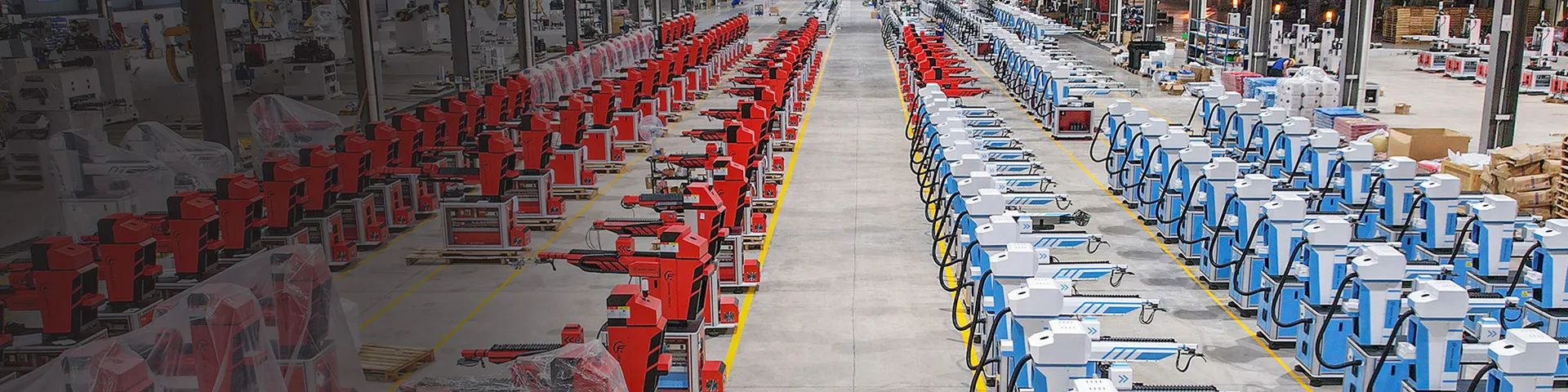
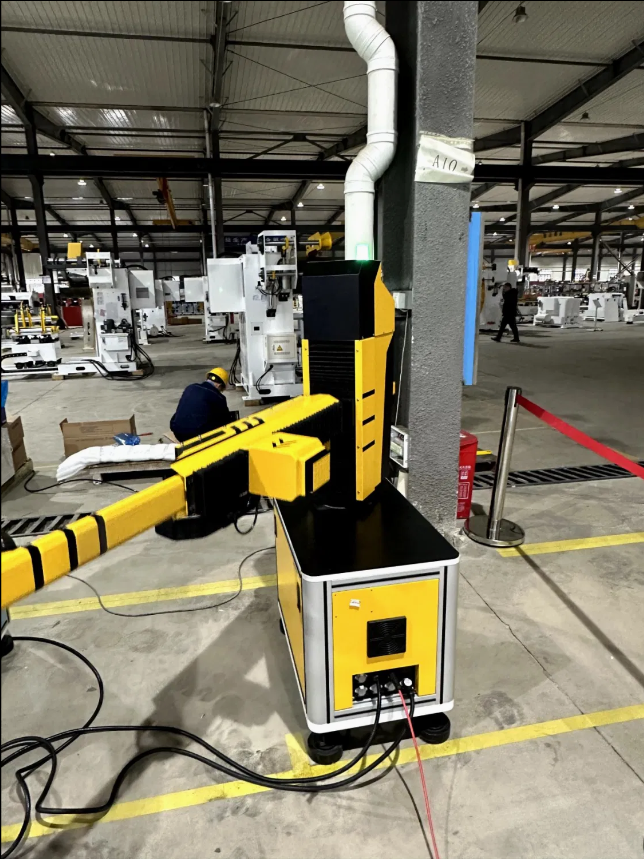
Certainly — here is a **1000-word English article** on **“Integrated Control Technology of Stamping robot”**:
---
Integrated Control Technology of Stamping robot
With the rapid development of intelligent manufacturing and industrial automation, Stamping robots have become essential equipment in modern production lines. They are widely used in automotive manufacturing, home appliances, metal processing, and other industries that require high-speed and high-precision handling of sheet metal parts. Compared with manual operation, Stamping robots can significantly improve production efficiency, reduce labor intensity, and enhance safety. However, to achieve stable, accurate, and efficient operation, Stamping robots rely heavily on integrated control technology. Integrated control technology refers to the combination of motion control, sensing, communication, safety protection, and production coordination into one unified system. This technology enables the robot to work closely with the stamping press and other automation equipment in a highly synchronized manner.
1. Concept of Integrated Control Technology
Integrated control technology of Stamping robot is a comprehensive automation control system that combines mechanical, electrical, and software technologies. Its main purpose is to coordinate the robot’s motion with the stamping machine’s working cycle. In a stamping production line, the robot must pick up raw materials, load them into the press, remove finished products, and transfer them to the next station. Each action must be completed at the correct time and in the correct position. Therefore, the robot controller, press controller, sensors, servo drives, and safety devices need to communicate seamlessly.
The “integration” in integrated control means not only connecting different devices, but also enabling them to operate as a complete system. This includes real-time data exchange, synchronized motion planning, fault diagnosis, and automatic adjustment of process parameters. Through integrated control, the Stamping robot can respond quickly to production requirements and maintain high accuracy even under high-speed conditions.
2. Main Components of the Control System
A Stamping robot control system usually consists of several key components.
2.1 Robot Controller
The robot controller is the core unit of the system. It receives instructions, processes movement paths, and controls the robot’s joints or servo motors. It also communicates with the stamping press and external devices. Modern controllers are often based on industrial computers or embedded systems and support high-speed data processing.
2.2 Servo Drive System
The servo drive system is responsible for converting control signals into mechanical motion. It ensures that the robot arm moves smoothly and accurately. Because stamping operations require frequent acceleration and deceleration, servo drives must have high response speed and strong anti-interference ability.
2.3 Sensors and Feedback Devices
Sensors are used to detect the position of the workpiece, the state of the press, and the movement of the robot. Common sensors include photoelectric sensors, proximity switches, encoders, and vision systems. Feedback devices help the controller correct errors and ensure precise positioning.
2.4 Communication Network
Industrial communication networks such as Ethernet/IP, Profinet, EtherCAT, and CAN bus are widely used in Stamping robot systems. They provide fast and reliable communication between the robot, press, conveyor, and safety system. A stable communication network is very important for synchronized production.
2.5 Safety System
Safety is a major issue in stamping applications because presses and robots operate at high speed with large force. Safety systems include emergency stop buttons, safety light curtains, protective fences, collision detection, and interlocking devices. These systems prevent accidents and protect both equipment and workers.
3. Working Principle of Integrated Control
The Stamping robot operates according to a coordinated control sequence. First, the system checks whether all devices are in a ready state. Then the robot receives signals from the press controller and starts its motion cycle. It picks up the workpiece from the feeder or conveyor and places it into the stamping die. After the press completes the stamping operation, the robot removes the finished part and transfers it to the next process.
During this process, the control system must ensure that the robot does not enter the press area until the press is fully opened and safe. At the same time, the press should not start stamping until the robot has left the danger zone. This coordination is achieved through signal exchange, timing control, and sometimes synchronous motion algorithms.
In advanced systems, the robot and press can share production data in real time. For example, if a sensor detects a defective part or a positioning error, the controller can stop the line immediately and trigger an alarm. This improves both product quality and operational safety.
4. Key Technologies in Integrated Control
4.1 Real-Time Motion Control
Real-time motion control is essential for accurate and fast robot movement. It allows the controller to calculate motion trajectories within milliseconds. This is especially important in high-speed stamping lines where timing errors can cause collisions or production delays.
4.2 Synchronous Control
The robot must work in sync with the press stroke. Synchronous control technology ensures that the robot’s actions match the press cycle precisely. This reduces idle time and increases production efficiency.
4.3 Adaptive Control
In actual production, material size, shape, and position may vary slightly. Adaptive control uses sensor feedback and intelligent algorithms to adjust the robot’s motion automatically. This makes the system more flexible and capable of handling different products.
4.4 Fault Diagnosis and Monitoring
Integrated control systems often include fault diagnosis functions. They can monitor motor temperature, signal loss, communication errors, and mechanical overload. When abnormal conditions occur, the system can issue warnings and help technicians locate the problem quickly.
4.5 Human-Machine Interface
The human-machine interface (HMI) allows operators to monitor the system and modify parameters easily. Through a touch screen or industrial computer, operators can view production status, alarm messages, and maintenance information. A user-friendly interface improves operation efficiency and reduces training costs.
5. Advantages of Integrated Control Technology
The application of integrated control technology brings many benefits to stamping robot systems. First, it improves production efficiency by reducing manual intervention and shortening idle time. Second, it increases precision and product consistency because the robot follows programmed motion paths. Third, it enhances safety by ensuring strict coordination between the robot and the press. Fourth, it reduces labor costs and physical risk for workers. Finally, it supports flexible manufacturing, allowing the same system to produce different products with only software adjustments.
6. Future Development Trends
In the future, integrated control technology of stamping robots will continue to develop toward intelligence, networking, and flexibility. Artificial intelligence and machine learning will be used to optimize motion planning and fault prediction. Industrial Internet of Things (IIoT) technology will enable remote monitoring and cloud-based management. Digital twins and simulation systems will help engineers test control programs before real production begins. In addition, the combination of vision recognition, force control, and collaborative robotics will make stamping systems more adaptive and efficient.
Conclusion
Integrated control technology is the core foundation of stamping robot automation. It combines motion control, communication, sensing, and safety into a unified system, ensuring that the robot and press work together efficiently and safely. With the continuous advancement of intelligent manufacturing, integrated control technology will play an increasingly important role in improving production quality, reducing costs, and promoting industrial modernization. For stamping robot systems, only by achieving true integration can high-speed, precise, and reliable automated production be realized.
---
If you want, I can also:
1. **turn this into a more academic essay style**,
2. **make it simpler and easier to read**, or
3. **add a title page and references**.
يستخدم هذا الموقع ملفات تعريف الارتباط لضمان حصولك على أفضل تجربة على موقعنا.



 هاتف
تعليق
(0)