 +86-151 6276 6160
 بيع002@hxdrobots.com
 English
 Español
 Pусский
 Français


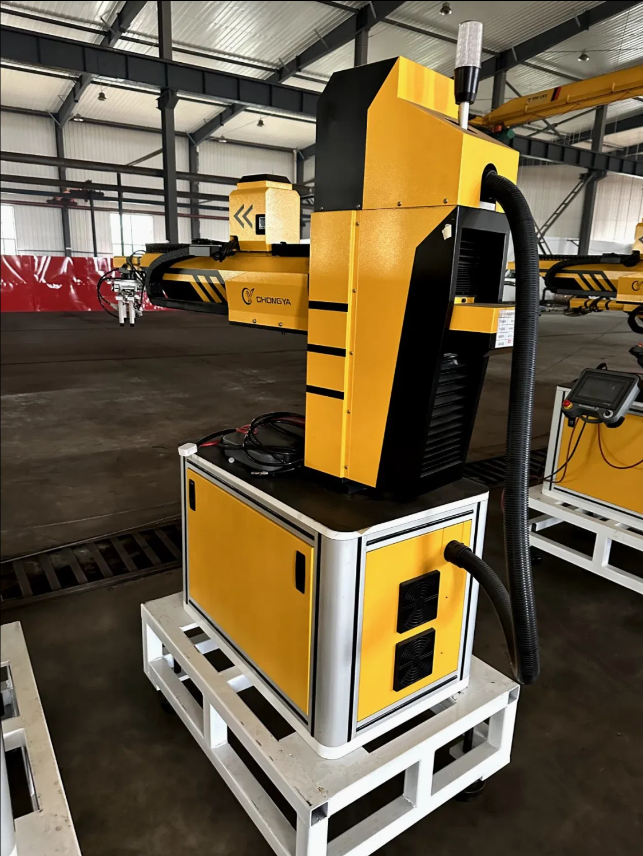
**Motorcycle Parts Stamping robot Usage**
In the modern motorcycle manufacturing industry, automation has become a key factor in improving efficiency, product quality, and workplace safety. Among the many automated technologies used in production, Stamping robots play an especially important role in the manufacturing of motorcycle parts. These robots are designed to handle stamping processes that involve shaping, cutting, punching, and forming metal sheets into different parts used in motorcycles. Their use has changed the way motorcycle components are produced, making the entire process faster, more accurate, and more reliable.
1. Introduction to Stamping robots in Motorcycle Production
Motorcycle parts are often made from metal materials such as steel, aluminum, or alloy sheets. These materials must be formed into precise shapes before they can be assembled into finished products. Traditional stamping methods usually depend heavily on manual labor. Workers need to place metal sheets into stamping machines, remove finished parts, and inspect the results. This method can be slow, physically demanding, and risky because stamping machines operate with high pressure and moving dies.
Stamping robots solve many of these problems. They are automated machines equipped with robotic arms, sensors, and control systems that can load, unload, transfer, and position metal sheets or stamped parts with great accuracy. In motorcycle parts manufacturing, Stamping robots are used for components such as brackets, covers, fuel tank parts, frame connectors, engine housings, and decorative metal pieces. By automating these tasks, manufacturers can maintain stable production and improve overall output.
2. Main Functions of Motorcycle Parts Stamping robots
The primary function of a stamping robot is to move materials accurately and efficiently within the stamping production line. In motorcycle part manufacturing, the robot may perform several tasks.
First, it can automatically pick up raw metal sheets from a storage area and place them into a stamping press. After the press completes the stamping cycle, the robot removes the formed part and transfers it to the next station. This continuous movement reduces waiting time and keeps the production line running smoothly.
Second, stamping robots can handle multiple steps in a single process. For example, a motorcycle part may need to go through several stamping stages, such as blanking, bending, piercing, and trimming. A robot can transfer the part from one die to another without human intervention. This makes the workflow more efficient and reduces the chance of damage caused by manual handling.
Third, robots can perform quality-related tasks. Some advanced stamping robots are equipped with vision systems and sensors that can detect defects, positioning errors, or missing materials. If a problem is identified, the robot can stop the process or remove defective parts before they continue to the next stage. This helps improve product consistency and reduces waste.
3. Advantages of Using Stamping Robots
The use of stamping robots in motorcycle parts production offers many advantages.
a. High Efficiency
Robots can work continuously without fatigue. Unlike human workers, they do not need breaks, and they can operate at a constant speed. This allows manufacturers to produce more parts in less time. High-volume production is especially important in the motorcycle industry, where many components are needed every day.
b. Improved Precision
Motorcycle parts often require strict dimensional accuracy. Even a small error in stamping can affect the performance or assembly of the final motorcycle. Robots can repeat the same movement with very high precision, ensuring that each part is placed correctly and formed consistently. This precision helps reduce variation between products.
c. Better Safety
Stamping machines are powerful and can be dangerous if operated manually. Workers may be exposed to risks such as hand injuries, crushing accidents, or heat-related hazards. By using robots to handle material feeding and part removal, the need for direct human contact with the machine is reduced. This significantly improves workplace safety.
d. Lower Labor Costs
Although the initial investment in robotic equipment can be high, the long-term labor cost can be reduced. Robots can replace repetitive manual tasks, allowing companies to use human workers in more valuable positions such as machine supervision, maintenance, and quality control.
e. Stable Product Quality
Robots are less likely to make mistakes caused by tiredness, distraction, or inconsistency. As a result, the quality of stamped motorcycle parts remains stable over long production runs. This is important for manufacturers who want to meet industry standards and customer expectations.
4. Common Types of Motorcycle Parts Made with Stamping Robots
Many different motorcycle components are manufactured using stamping robots. Some common examples include:
- **Brackets and mounting plates**: These parts support other components and must be shaped accurately.
- **Body panels and covers**: Stamped metal covers protect internal systems and improve appearance.
- **Fuel tank components**: Some fuel tank parts require precise forming and trimming.
- **Engine-related metal parts**: Certain housings and supports are stamped for strength and durability.
- **Footrests and handlebars accessories**: These parts may need bending, punching, or shaping.
- **Decorative metal trims**: Stamping robots help create smooth and uniform finishing for visible parts.
Because motorcycle parts differ in size, shape, and complexity, stamping robots must be flexible and programmable. Manufacturers can adjust the robot’s movements to match different products and production requirements.
5. Integration with Modern Production Lines
In modern factories, stamping robots are rarely used alone. They are usually integrated with stamping presses, conveyor systems, sensors, and computer control platforms. A central control system coordinates all equipment to ensure smooth operation. For example, when a press completes a cycle, the robot receives a signal and moves the part to the next station automatically.
Some factories also use industrial Internet of Things (IIoT) technology to connect robots with production management systems. This allows managers to monitor output, detect failures early, and collect data for process improvement. In this way, stamping robots are not only tools for automation but also part of a smart manufacturing system.
6. Challenges in Robot Usage
Although stamping robots provide many benefits, there are still some challenges. The first is the high cost of purchasing and installing robotic systems. Small or medium-sized manufacturers may find the investment difficult at the beginning. The second challenge is the need for skilled technicians who can program, maintain, and troubleshoot the robots. Without proper training, the system may not perform efficiently.
Another issue is flexibility. If a factory produces many types of motorcycle parts with different sizes and shapes, the robot system must be carefully designed to handle these variations. Additionally, regular maintenance is necessary to keep the equipment reliable and avoid production delays.
7. Future Development
The future of motorcycle parts stamping robots looks very promising. With the development of artificial intelligence, machine vision, and advanced sensors, robots will become even smarter and more adaptable. They will be able to recognize part shapes automatically, adjust their movements in real time, and improve defect detection. Collaborative robots and more intelligent automation will likely become more common in motorcycle manufacturing.
In addition, as factories move toward green and sustainable production, stamping robots can help reduce material waste and improve energy efficiency. By increasing accuracy and reducing defective parts, robots support both economic and environmental goals.
8. Conclusion
Motorcycle parts stamping robots have become an essential part of modern motorcycle manufacturing. They improve efficiency, precision, safety, and product consistency while reducing labor intensity and production costs. From loading raw materials to transferring finished parts, these robots perform important tasks that support the entire stamping process. Although there are challenges such as cost and technical requirements, the long-term benefits are significant. As technology continues to advance, stamping robots will play an even greater role in the production of high-quality motorcycle parts, helping manufacturers meet the demands of a competitive global market.
يستخدم هذا الموقع ملفات تعريف الارتباط لضمان حصولك على أفضل تجربة على موقعنا.



 هاتف
تعليق
(0)