 +86-151 6276 6160
 بيع002@hxdrobots.com
 English
 Español
 Pусский
 Français


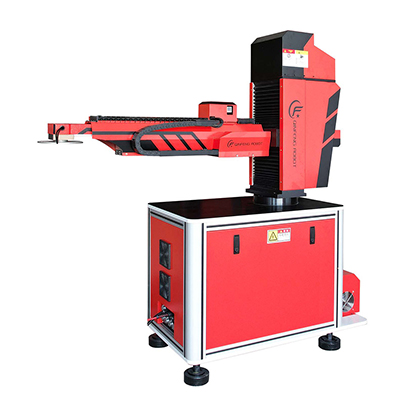
Certainly — here is a ~1000-word English essay on **“Multi-Functional Integration Trend of Robots”**:
---
The Multi-Functional Integration Trend of Robots
In recent decades, robots have moved far beyond the narrow roles of repetitive industrial machines. Today, they are increasingly designed with multiple functions, greater adaptability, and the ability to operate in diverse environments. This development is known as the **multi-functional integration trend of robots**. It reflects the transformation of robots from single-purpose tools into intelligent systems capable of perception, decision-making, communication, and physical action. This trend is reshaping manufacturing, healthcare, service industries, education, agriculture, and even daily life.
1. From Single-Task Machines to Multi-Functional Systems
Early robots were mainly used in factories for tasks such as welding, assembling, painting, and transporting materials. These robots were efficient, but they could only perform one specific job or a limited range of tasks. If the production process changed, the robot often had to be reprogrammed or replaced. This made early robots useful but inflexible.
With the advancement of artificial intelligence, sensors, control systems, and mechanical engineering, robots are now being built to perform multiple tasks in a single platform. For example, a modern service robot may be able to clean floors, avoid obstacles, deliver items, and interact with users through voice commands. A medical robot may assist in surgery, monitor patient conditions, and help with rehabilitation. This integration of different functions into one machine makes robots more versatile and valuable.
2. Why Multi-Functional Integration Is Important
The trend toward multi-functional integration is driven by several important needs. First, industries and consumers want greater efficiency. Instead of buying several different machines, businesses prefer one robot that can do multiple jobs. This reduces cost, saves space, and simplifies management.
Second, real-world environments are complex and constantly changing. A robot working in a warehouse, hospital, home, or outdoor setting must be able to handle many situations. Multi-functional integration helps robots adapt to these environments more effectively. A robot that can recognize objects, move safely, communicate with humans, and complete different tasks is much more practical than a machine with only one ability.
Third, labor shortages in many countries have increased demand for robots that can support human workers in various ways. In aging societies especially, robots are needed not only for industrial work but also for elderly care, medical support, and household assistance. A multi-functional robot can provide wider social value by meeting several needs at once.
3. Key Technologies Behind the Trend
The multi-functional integration trend is possible because of progress in several core technologies.
Artificial Intelligence
AI gives robots the ability to learn, recognize patterns, understand speech, and make decisions. Through machine learning and deep learning, robots can improve their performance over time and handle more complex tasks.
Sensors and Perception
Modern robots use cameras, infrared sensors, ultrasonic sensors, force sensors, and other devices to understand their environment. These sensors allow robots to detect objects, measure distance, recognize faces, and react to changes around them.
Advanced Control Systems
Control systems coordinate the robot’s actions so that different functions work together smoothly. For example, a robot may need to move, scan, grasp an object, and communicate with a user at the same time. Intelligent control systems make this possible.
Modular Design
Many multi-functional robots are designed in modular form. This means different parts or attachments can be added or removed depending on the task. A modular robot can transform from a cleaning machine into a delivery assistant or inspection device by changing its tools or software.
Human-Robot Interaction
As robots become more integrated into daily life, they must communicate naturally with humans. Voice recognition, gesture recognition, and emotional response systems help robots work in social environments and serve users more effectively.
4. Applications in Different Fields
The multi-functional integration trend can be seen in many industries.
Manufacturing
In factories, robots are no longer limited to one production step. Some robots can inspect products, transport materials, assemble parts, and even cooperate with human workers on flexible production lines. This increases productivity and reduces downtime.
Healthcare
Medical robots are becoming more versatile. Surgical robots assist doctors in precise operations, rehabilitation robots help patients recover movement, and service robots support hospital logistics such as delivering medicine or disinfecting rooms. In the future, one robot may combine several of these roles.
Home and Service Industries
Household robots are a clear example of multi-functional integration. A robot vacuum may also mop the floor, monitor home security, or respond to voice commands. In restaurants, hotels, and shopping centers, service robots may greet customers, guide visitors, and deliver goods.
Agriculture
Agricultural robots can plant seeds, monitor crop health, spray fertilizer, and harvest fruits. A multi-functional agricultural robot reduces the need for different machines and helps farmers manage large areas more efficiently.
Education and Entertainment
Educational robots can teach languages, program basic coding lessons, and interact with children through games. Entertainment robots may sing, dance, play interactive games, and provide companionship. Their ability to combine learning and amusement makes them attractive in schools and homes.
5. Advantages of Multi-Functional Robots
Multi-functional robots offer many benefits. They improve productivity by reducing the number of separate devices needed. They also save labor and operational costs. Because they can perform different tasks, they are useful in environments where flexibility is essential. In addition, multi-functional robots often enhance safety by taking over dangerous, repetitive, or physically demanding jobs.
Another advantage is convenience. A single robot that can clean, monitor, communicate, and assist users is easier to manage than several separate systems. This makes robots more appealing to businesses and consumers alike.
6. Challenges and Future Development
Despite their many advantages, multi-functional robots still face challenges. Designing a robot that can do many things well is technically difficult. More functions usually mean more complex hardware and software, which can raise costs and increase the risk of malfunction. In addition, robots must become more reliable, safer, and easier to use before they can be widely adopted in daily life.
Another issue is ethical and social concern. As robots take on more roles, people worry about job displacement, privacy, and dependence on machines. Therefore, the development of robots should be guided by responsible policies and human-centered design.
In the future, robots will likely become even more integrated. They may combine mobility, manipulation, communication, learning, and emotional understanding in one system. Cloud computing, 5G networks, and edge AI will further improve their performance. We may eventually see robots that can switch smoothly between household care, health monitoring, office assistance, and personal companionship.
Conclusion
The multi-functional integration trend of robots represents a major step in the evolution of robotics. Robots are no longer just single-purpose machines; they are becoming intelligent, flexible, and adaptable partners in many areas of life. This trend is supported by advances in artificial intelligence, sensors, control systems, and modular design. As robots continue to integrate more functions, they will play an increasingly important role in industry, healthcare, services, agriculture, and home life. Although challenges remain, the future of robotics clearly points toward greater integration and greater usefulness. Multi-functional robots will not only improve efficiency but also help create a smarter and more connected world.
---
If you want, I can also:
1. make it **simpler for school students**,
2. make it **more academic and formal**, or
3. rewrite it into a **speech / report / IELTS-style essay**.
يستخدم هذا الموقع ملفات تعريف الارتباط لضمان حصولك على أفضل تجربة على موقعنا.



 هاتف
تعليق
(0)