 +86-151 6276 6160
 بيع002@hxdrobots.com
 English
 Español
 Pусский
 Français


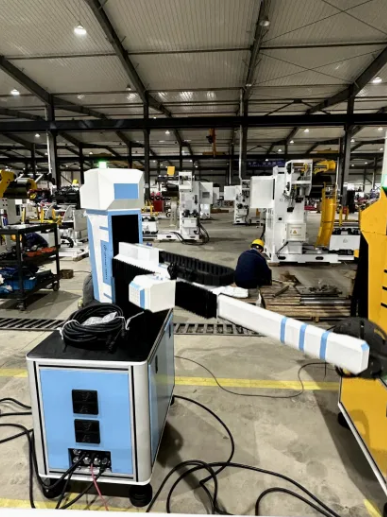
**Positioning Calibration Maintenance of a Stamping robot**
A Stamping robot plays an important role in modern manufacturing, especially in automotive, appliance, and metal processing industries. It is designed to move heavy materials, place workpieces accurately, and cooperate with stamping presses to improve efficiency and safety. However, in order to keep the robot working with high precision, positioning calibration maintenance is essential. Without proper calibration, the robot may place parts in the wrong position, cause product defects, damage tools, or even create safety risks. Therefore, understanding and performing positioning calibration maintenance is one of the most important tasks in robot operation and production management.
1. Importance of Positioning Calibration
Positioning calibration refers to the process of checking and adjusting the robot’s actual movement position so that it matches the programmed position. In stamping production, even a very small error can affect the entire process. For example, if the robot does not correctly position a metal sheet into the press die, the stamping result may be inaccurate. This can lead to scrap, machine wear, and production interruption. Because Stamping robots often operate continuously and under heavy load, their accuracy may gradually decrease over time due to mechanical wear, vibration, temperature change, or collision. Calibration helps restore accuracy and ensures stable operation.
2. Main Factors Affecting Position Accuracy
Several factors can influence the positioning accuracy of a Stamping robot. First, mechanical wear is a common reason. After long-term operation, gears, reducers, joints, and bearings may loosen or wear out, causing deviations in movement. Second, external force or collision may change the robot’s original position. In stamping lines, the robot often works in a narrow area, so accidental impact is possible. Third, temperature and environment can also affect the robot. High temperature, humidity, dust, and vibration may all reduce the stability of sensors and components. Fourth, control system errors, such as incorrect parameter settings or encoder drift, can also lead to inaccurate positioning. Recognizing these factors is the first step in good maintenance.
3. Basic Procedures of Calibration Maintenance
Positioning calibration maintenance usually includes inspection, measurement, adjustment, testing, and recording. Before calibration begins, the robot must be stopped safely and locked out of the production line. Operators should check whether the robot arm, end effector, cables, and fixtures are damaged or loose. Then the actual position of the robot is measured using reference tools, laser trackers, calibration jigs, or teaching devices. These measurements are compared with the programmed coordinates in the control system.
If the deviation is small, it may be corrected by software adjustment. If the deviation is large, mechanical adjustment may be needed. For example, the robot base may need to be re-leveled, the joint zero position may need to be reset, or the gripper installation position may need to be corrected. After adjustment, a test run should be performed to verify accuracy under real working conditions. Finally, all calibration data should be recorded for future reference and maintenance tracking.
4. Key Components to Maintain
A Stamping robot has several key parts that require regular maintenance. The reducer and gearbox are very important because they affect motion precision. If lubrication is insufficient or the internal parts are worn, positioning error will increase. Joints and bearings should also be checked for noise, vibration, and looseness. The servo motors and encoders must be in good condition because they control the robot’s movement and feedback. The gripper or end-effector should be inspected to make sure it firmly holds the workpiece without slipping. In addition, cables, connectors, and control panels should be checked for damage or aging. Regular maintenance of these parts helps prevent calibration problems before they become serious.
5. Calibration Frequency and Planning
The frequency of positioning calibration depends on production intensity, working environment, and equipment condition. For robots operating in high-load stamping lines, calibration may be needed more frequently. In general, routine inspection should be done daily or weekly, while full calibration may be performed monthly, quarterly, or after major maintenance. Calibration is also necessary after replacing key parts, moving the robot, changing the gripper, or experiencing a collision. A good maintenance plan should be based on actual production data and equipment history. Planned maintenance is always better than emergency repair because it reduces downtime and improves productivity.
6. Safety Considerations
Safety is a major concern during calibration maintenance. Stamping robots work with heavy equipment and powerful presses, so any mistake can cause serious injury. Before maintenance, the power supply should be disconnected and the system should be locked out and tagged out. Operators must follow safety procedures and wear protective equipment. During calibration, the press should not operate unless the area is confirmed safe. Only trained technicians should perform calibration work. Clear communication between maintenance staff, operators, and production supervisors is also necessary. Safety should always be the first priority.
7. Benefits of Good Calibration Maintenance
Good positioning calibration maintenance brings many benefits. It improves product quality by ensuring accurate placement of workpieces. It reduces scrap and rework, which saves materials and labor costs. It also extends the service life of robot components by reducing unnecessary stress and collision. In addition, accurate calibration improves production efficiency because the robot can work smoothly and continuously without frequent interruptions. Most importantly, it increases workplace safety and supports stable automated production. In a highly competitive manufacturing environment, these advantages are very valuable.
8. Conclusion
In conclusion, positioning calibration maintenance is a vital part of stamping robot operation. It ensures that the robot maintains high accuracy, stable performance, and safe working conditions. Because stamping robots are exposed to continuous load, vibration, and environmental influence, regular inspection and calibration are necessary. Maintenance should include mechanical checks, measurement of actual position, software adjustment, testing, and documentation. With a proper maintenance schedule and strict safety control, the stamping robot can work reliably for a long time. As manufacturing continues to develop toward automation and intelligence, positioning calibration maintenance will remain an important foundation for efficient and high-quality production.
If you want, I can also help you turn this into:
1. a **more formal essay**,
2. a **1000-word academic article**, or
3. a **simpler English version for students**.
يستخدم هذا الموقع ملفات تعريف الارتباط لضمان حصولك على أفضل تجربة على موقعنا.



 هاتف
تعليق
(0)