 +86-151 6276 6160
 بيع002@hxdrobots.com
 English
 Español
 Pусский
 Français


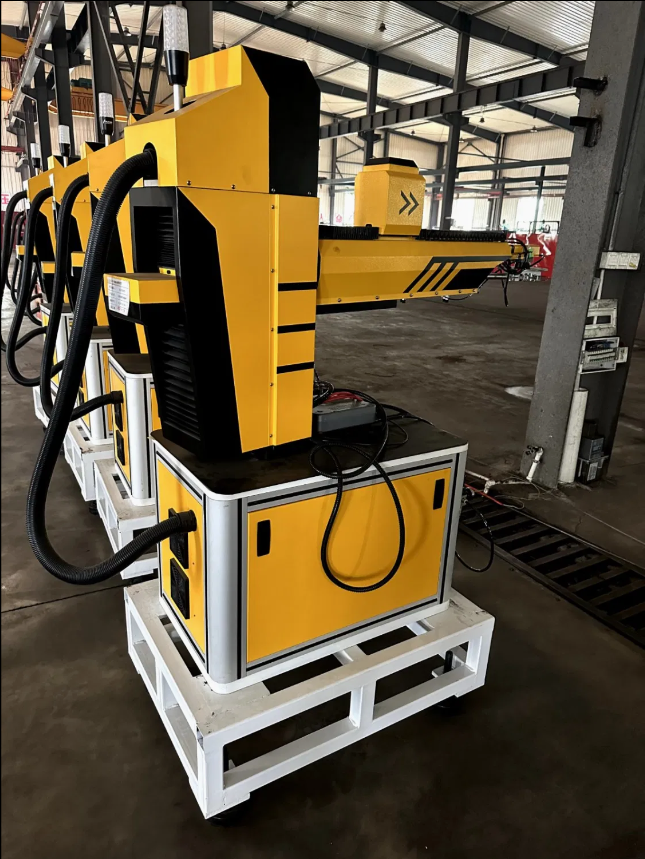
Certainly — here is an approximately 1000-word English article on **“Shaping Process Using Stamping robot”**:
---
Shaping Process Using Stamping robot
With the rapid development of modern manufacturing, automation has become an essential part of industrial production. Among the many automated technologies used in metal forming, the Stamping robot plays an increasingly important role in the shaping process. A Stamping robot is a robotic system designed to handle, transfer, and position materials during stamping operations. It improves efficiency, precision, safety, and consistency in the shaping of metal parts. This technology is widely used in industries such as automotive manufacturing, aerospace, electronics, home appliances, and general metal fabrication.
Introduction to Stamping robots
Stamping is a manufacturing process in which sheet metal is shaped by pressing it into a die using high force. The process may include punching, blanking, bending, drawing, and forming. Traditionally, workers manually loaded and unloaded metal sheets or parts between stamping machines. However, manual handling is slow, labor-intensive, and can lead to injuries due to the heavy tools and fast-moving equipment involved.
A Stamping robot replaces or assists human workers in these operations. It can move raw materials, transfer stamped parts, and coordinate with stamping presses to complete the shaping process automatically. Depending on the application, stamping robots may be articulated robotic arms, gantry robots, or specialized transfer robots. Their main purpose is to ensure that every stamping cycle is accurate, safe, and efficient.
Role of Stamping Robots in the Shaping Process
The shaping process using a stamping robot begins with material feeding. Flat metal sheets or coils are first prepared and positioned near the stamping press. The robot then picks up the material and places it into the correct position within the die. After the press closes and performs the stamping action, the robot removes the finished part and transfers it to the next station, such as another press, a trimming machine, or a storage area.
In multi-stage stamping operations, the robot may move the part through several dies in sequence. This is especially common in automotive panel production, where a single sheet metal piece may go through blanking, forming, drawing, and trimming stages. By using a stamping robot, the entire shaping workflow becomes continuous and synchronized.
The robot’s precise motion control is one of its greatest advantages. It can place each sheet or part with high accuracy, ensuring that the die is aligned correctly every time. This reduces the risk of defects caused by poor positioning, such as wrinkles, cracks, or incomplete shapes. In addition, the robot can handle parts at high speed without fatigue, which helps maintain a stable production rate.
Main Components of a Stamping Robot System
A stamping robot system usually consists of several key components. First is the robotic arm, which provides flexible movement and can operate in multiple directions. Second is the end effector or gripper, which holds the metal sheet or stamped part securely. The gripper may use mechanical clamps, vacuum suction, or magnetic force depending on the shape and surface of the material.
Third is the control system, which includes sensors, software, and programmable logic controllers. This system allows the robot to follow precise movement paths and communicate with the stamping press. It also monitors safety conditions and coordinates timing so that the robot does not enter the press area while the machine is active.
Another important component is the stamping press itself. The robot and press must work together in a carefully timed cycle. If the press is too fast or the robot is delayed, the process may stop. Therefore, integration and synchronization are essential. In advanced systems, machine vision and sensor feedback are added to improve positioning accuracy and detect errors in real time.
Advantages of Using Stamping Robots
One of the biggest advantages of using stamping robots is improved productivity. Robots can work continuously for long hours without breaks, allowing manufacturers to increase output and meet high production demands. Their cycle times are often shorter and more consistent than manual operations.
Another major benefit is safety. Stamping presses operate with very high force and speed, making them dangerous for human workers. By automating material handling, stamping robots reduce the risk of accidents, injuries, and repetitive strain. This creates a safer working environment and lowers compensation and insurance costs.
Stamping robots also improve product quality. Human errors such as incorrect placement, inconsistent feeding, or delayed handling can cause defects. Robots perform each task with repeatable precision, which leads to more uniform parts and fewer rejected products. This is particularly important in industries where accuracy is critical, such as automotive body panel production.
In addition, stamping robots help reduce labor costs in the long term. Although the initial investment in robotic equipment may be high, the savings from lower labor requirements, reduced scrap, and improved efficiency can make the system highly cost-effective over time. Robots also make it possible for factories to remain competitive in markets with rising wages and increasing quality standards.
Applications in Industry
Stamping robots are used in many industries. In the automotive industry, they are widely used to shape body panels, brackets, doors, hoods, and structural components. These parts must be produced in large quantities with high precision, making automation ideal.
In the electronics industry, stamping robots help shape small metal components such as connectors, shields, and casings. Since these parts are often delicate and require exact dimensions, robotic handling is very useful. In the appliance industry, robots assist in shaping parts for refrigerators, washing machines, ovens, and air conditioners.
Aerospace manufacturers also use stamping robots for shaping lightweight but strong metal parts. Although production volumes may be lower than in automotive manufacturing, the required precision is extremely high. Robots help meet these standards while maintaining consistency.
Challenges and Future Development
Despite their many advantages, stamping robots also face some challenges. The initial cost of purchasing and installing a Robotic stamping system can be significant. Small and medium-sized companies may find this investment difficult. In addition, the system requires skilled technicians for programming, maintenance, and troubleshooting.
Another challenge is flexibility. If a factory changes product designs frequently, the robot may need to be reprogrammed or adjusted. However, modern robots are becoming more adaptable thanks to smarter software, better sensors, and artificial intelligence. These technologies allow robots to learn new tasks faster and respond to changes in production.
In the future, stamping robots are expected to become even more intelligent and efficient. With the development of Industry 4.0, robots will be able to connect with other machines, share data, and optimize production automatically. Machine learning, vision systems, and predictive maintenance will further improve performance and reduce downtime.
Conclusion
The shaping process using a stamping robot represents a major advancement in modern manufacturing. By automating material handling and part transfer, stamping robots increase speed, accuracy, safety, and quality. They play an essential role in industries that require high-volume and high-precision metal forming. Although there are challenges such as cost and complexity, the long-term benefits make stamping robots a valuable investment. As technology continues to develop, stamping robots will become even more intelligent, flexible, and important in the future of industrial production.
---
If you want, I can also help you with:
1. **a simpler English version**,
2. **a more academic version**, or
3. **a Chinese translation** of this article.
يستخدم هذا الموقع ملفات تعريف الارتباط لضمان حصولك على أفضل تجربة على موقعنا.



 هاتف
تعليق
(0)