 +86-151 6276 6160
 بيع002@hxdrobots.com
 English
 Español
 Pусский
 Français

Certainly — here is an approximately 1000-word English article on **“Stamping Process Matching With Stamping robot”**.
---
Stamping Process Matching With Stamping robot
In modern manufacturing, automation has become a key factor in improving productivity, quality, and safety. Among many automated systems, the Stamping robot plays an important role in the metal stamping industry. Stamping is a process used to shape flat sheet metal into desired forms by pressing it with a die and punch. When combined with robots, stamping operations can become faster, more stable, and more efficient. However, to achieve the best results, the stamping process must be carefully matched with the Stamping robot. This matching involves coordination between the production line, the robot’s motion, the stamping cycle, material handling, and safety systems.
1. What Is a Stamping robot?
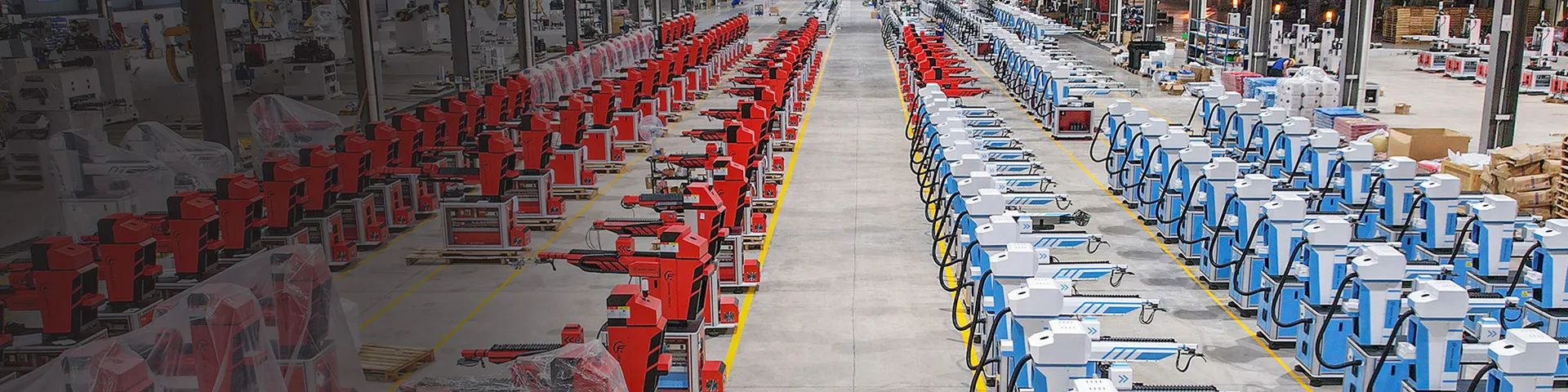
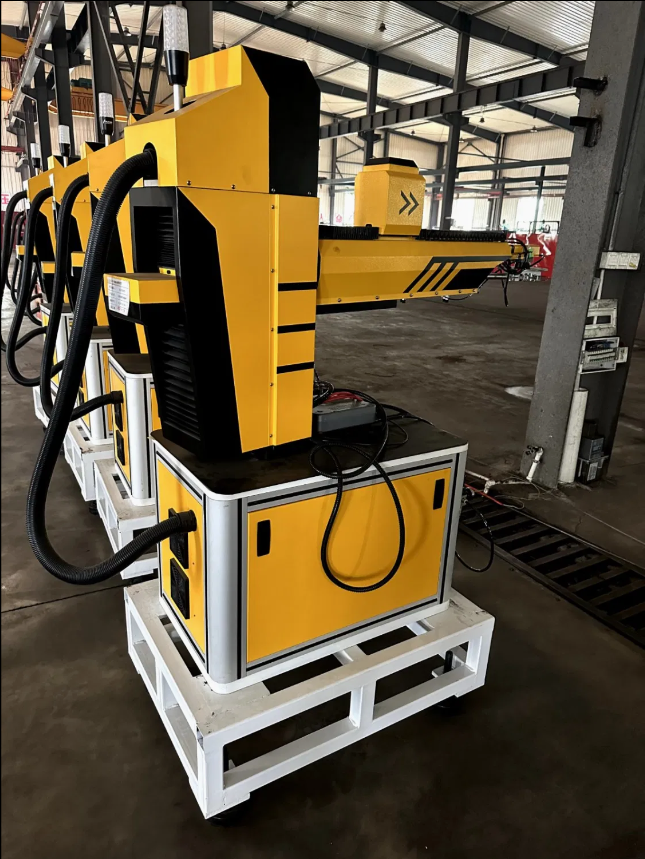
A Stamping robot is an industrial robot designed to handle sheet metal parts during the stamping process. Its main tasks include loading material into the press, transferring workpieces between stations, and unloading finished parts. In some systems, the robot also performs sorting, stacking, or inspection. Compared with manual operation, a Stamping robot can work continuously, reduce labor costs, and improve consistency.
Stamping robots are often used in automotive manufacturing, appliance production, electronics, and hardware industries. Because stamping presses operate at high speed and with great force, robots are especially useful in these environments. They help minimize human exposure to dangerous machines and improve production efficiency.
2. Importance of Matching the Stamping Process With the Robot
A Stamping robot cannot operate effectively unless it is matched properly with the stamping process. Every stamping line has its own requirements, such as press speed, part size, material thickness, die structure, and transfer distance. If the robot is not synchronized with these factors, problems may occur, including collisions, low throughput, damaged parts, or unstable production.
Proper matching ensures that the robot’s motion path, speed, and gripping method are suitable for the stamping cycle. It also ensures that the robot can complete all actions within the press’s available time. In this way, the whole system can run smoothly and efficiently.
3. Key Factors in Process Matching
3.1 Press Cycle Time
The press cycle time is one of the most important factors. The robot must be able to pick up, transfer, and place the workpiece within the time interval allowed by the press. If the robot is too slow, it will reduce production capacity. If it moves too aggressively, it may cause vibration or part deformation.
Therefore, engineers must calculate the robot’s required speed and acceleration according to the press cycle. In high-speed stamping lines, robots with fast response and precise control are usually selected.
3.2 Workpiece Shape and Size
Different stamped parts have different shapes, weights, and surface conditions. Large or irregular parts may require special grippers or suction cups. Thin sheets may bend easily, while heavy parts may need stronger handling devices. The robot must be matched with the workpiece so that it can hold the part securely without damaging it.
For example, an automotive body panel may need multiple suction points to prevent deformation, while a small bracket may be handled with mechanical fingers. The gripping system must be designed according to the specific product.
3.3 Motion Path and Space Layout
The robot’s motion path must fit the layout of the stamping line. The robot needs enough space to enter and exit the press area without interfering with the die, press slide, or other equipment. A poor layout can create dead zones or increase cycle time.
When planning the system, engineers should consider the robot’s reach, joint angles, and path planning. The movement should be smooth and short to reduce time and energy consumption. In many cases, offline simulation software is used to optimize the robot path before installation.
3.4 Gripping and Feeding Method
The way the robot handles parts is another major issue. Some stamping lines use sheet feeding from coils, while others transfer semi-finished parts between different presses. The robot must have a proper end-effector, such as a vacuum gripper, magnetic tool, or mechanical clamp, depending on the material and process.
The feeding method must also match the press tooling. The robot must place the blank or part at the exact position required by the die. Even small errors can result in defective parts or machine damage. Accurate positioning is therefore essential.
3.5 Communication and Synchronization
A Stamping robot must communicate with the press control system. Sensors, controllers, and safety devices all need to work together. The robot should know when the press is open, when it is safe to enter, and when to withdraw. This synchronization is often managed through PLC systems and industrial communication protocols.
If timing is not correct, the robot may enter too early or leave too late, leading to collisions and serious damage. Good communication ensures safe and efficient coordination between the robot and the press.
4. Benefits of Proper Matching
When the stamping process is well matched with the stamping robot, the production line gains several advantages.
First, productivity increases. Robots can work continuously without fatigue, which makes the line faster and more stable. Second, product quality improves because the robot can repeat the same motion with high accuracy. Third, labor costs are reduced because fewer workers are needed for dangerous or repetitive tasks. Fourth, workplace safety is improved since operators are kept away from high-force machines and sharp metal edges.
In addition, proper matching reduces scrap and downtime. Fewer positioning errors mean fewer defective parts. Better timing and path planning also help avoid interruptions in production.
5. Challenges in Matching
Despite its advantages, process matching is not always easy. Stamping lines vary greatly from one factory to another. Some systems involve multiple presses, different material types, or complex die changes. In such cases, the robot must be flexible enough to adapt.
Another challenge is maintenance and wear. Over time, grippers, sensors, and mechanical parts may lose accuracy. If maintenance is not done properly, the matching between process and robot will become less reliable. Therefore, regular inspection and calibration are necessary.
Software integration is also a challenge. The robot program, press control, and safety system must be developed carefully. Engineers must test every step before mass production begins. Simulation and trial runs can help reduce risk.
6. Future Development
With advances in artificial intelligence, vision systems, and flexible automation, stamping robots are becoming smarter and more adaptable. Future systems may use machine vision to identify part position automatically, allowing the robot to adjust in real time. More advanced sensors will improve precision and safety. Collaborative robots and digital twins may also play a role in future stamping lines.
As manufacturing demands continue to change, the ability to match stamping processes with robots will become even more important. Flexible, intelligent, and efficient automation will be the direction of development.
Conclusion
Stamping process matching with stamping robot is a key issue in modern automated manufacturing. A stamping robot can bring great benefits in speed, safety, and consistency, but only if it is properly matched with the stamping process. Factors such as press cycle time, workpiece shape, motion path, gripping method, and communication must all be carefully considered. Through good design, accurate synchronization, and continuous improvement, manufacturers can build efficient stamping systems that meet the needs of modern production.
---
If you want, I can also:
1. **rewrite this in simpler English**,
2. **make it more academic**, or
3. **turn it into a formal essay with introduction, body, and conclusion**.
يستخدم هذا الموقع ملفات تعريف الارتباط لضمان حصولك على أفضل تجربة على موقعنا.



 هاتف
تعليق
(0)